
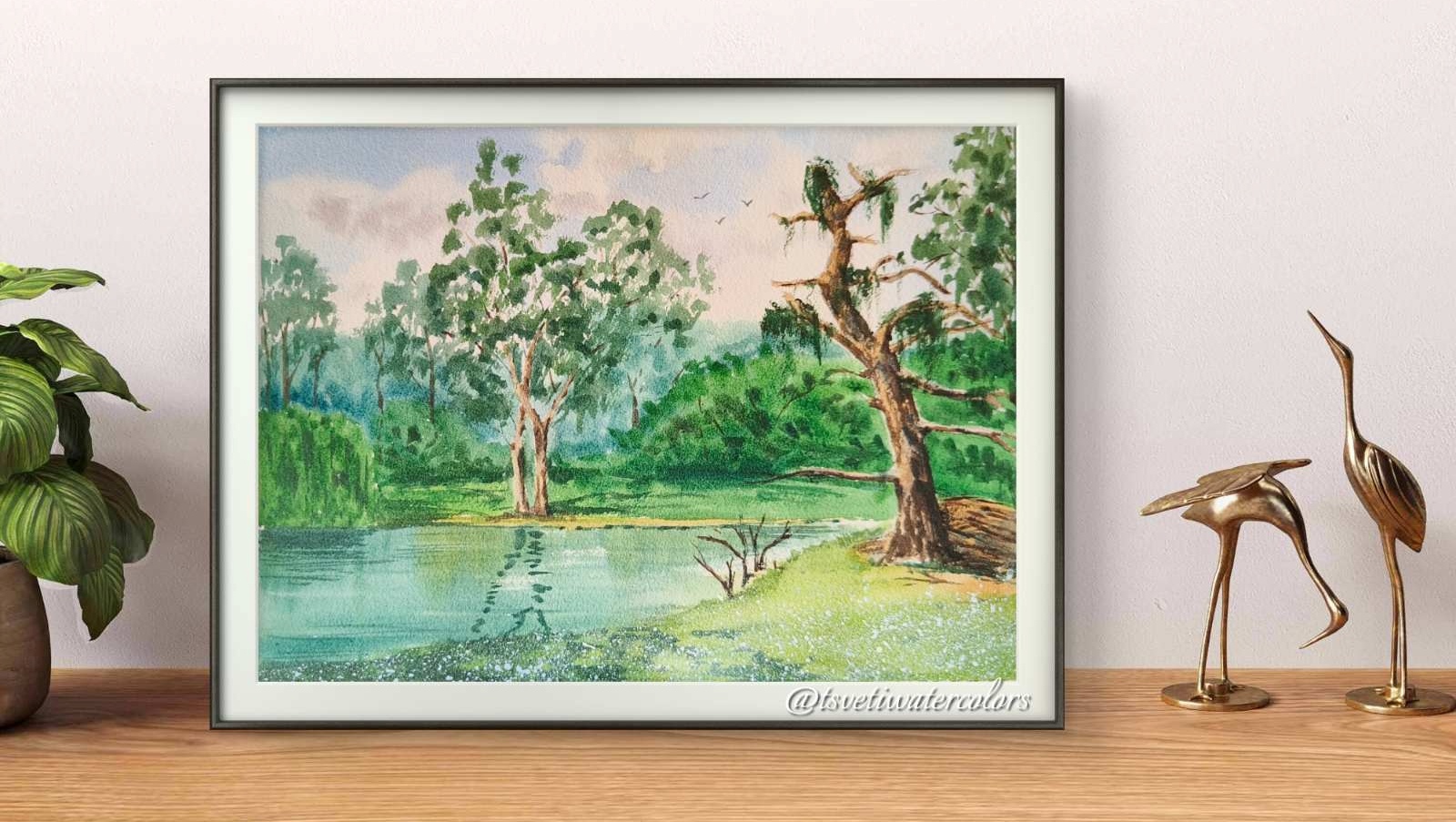
When it comes to showcasing a beautiful watercolor painting, framing is more than just putting it in a protective border—it’s about enhancing the artwork while preserving its delicate nature. Watercolors are unique in their transparency, luminosity, and softness, which makes framing them correctly essential. Here’s a breakdown of the main roles framing plays in presenting watercolor art, along with some expert tricks to ensure your piece stands out.
Why Framing Is So Important for Watercolor Paintings
Watercolor paintings are delicate and require proper framing to protect them from damage. Unlike oil or acrylic paintings, watercolors are painted on paper, which is vulnerable to fading, bending, and environmental factors like humidity. The right frame serves several key purposes:
Protection: Watercolors need to be shielded from dirt, dust, and moisture. A frame keeps your painting safe and helps it last for generations.
Aesthetic Enhancement: Framing is an opportunity to elevate the visual impact of the painting. A well-chosen frame can complement the colors, style, and mood of the watercolor while drawing attention to the artwork.
Longevity: Proper framing preserves the color vibrancy and detail of the painting. UV-protective glass and matting materials prevent the painting from fading over time due to exposure to sunlight.
Presentation: A beautiful frame adds a polished, finished look to your piece. It gives your painting a place to shine, whether it’s hanging in a gallery, your living room, or an office.
Key Elements to Consider When Framing Watercolors
When you’re framing a watercolor painting, there are a few main factors to keep in mind to ensure it’s done properly:
1. Glass and UV Protection
Watercolors are susceptible to fading, especially when exposed to direct sunlight over time. Using glass with UV protection (like museum glass or conservation glass) helps preserve the colors by filtering out harmful UV rays. This can make a big difference in the longevity of the artwork, preventing the colors from dulling or changing.
Tip: If you’re framing an important watercolor or a piece that holds sentimental value, always invest in UV-protective glass.
2. Matting for Depth and Protection
Matting serves two important roles: it creates a visual border between the painting and the frame, and it prevents the artwork from touching the glass. If a watercolor painting touches the glass, condensation can form, causing the paint to smudge or get ruined over time.
Tip: Use acid-free, archival-quality matting to ensure the paper doesn’t yellow or degrade. Keep the mat color neutral to allow the painting to take center stage, or choose a color that complements the painting’s palette.
3. The Frame Itself
Choosing the right frame is crucial. The frame should never overpower the painting but rather complement it. For watercolor, a thinner frame is often preferred because heavy frames can detract from the light, airy quality of the piece. Wood frames with a natural finish, black frames, or simple metallic frames tend to work well with watercolor art.
Tip: Opt for a frame color that complements the tone of your watercolor. For instance, a gold frame works wonderfully with warm, earthy colors, while a sleek black or silver frame suits modern, minimalist works.
4. Spacing (Floating vs. Full Framing)
There are two main framing techniques you can choose for a watercolor painting: full framing and floating.
Full Framing: This is the traditional method, where the watercolor is placed in the frame with a mat surrounding the edges. The mat holds the painting in place and keeps it from touching the glass.
Floating: For a more contemporary look, you can “float” the watercolor painting inside the frame, meaning it is mounted onto a backing board, with no mat, so the edges of the painting are visible. This style works well for paintings with a lot of detail or those that bleed to the edges of the paper.
Tip: If you want to showcase the texture of the watercolor paper or give it a more modern look, floating may be the way to go.
Tricks for Framing Watercolors Like a Pro
1. Leave Room for Expansion
Watercolor paper can warp or expand slightly when it gets exposed to humidity or temperature changes. To prevent this from distorting the painting, leave a small gap between the paper and the glass (this can be done using spacers or a deeper frame). This ensures that the paper can expand or contract without pressing against the glass.
2. Consider the Room’s Lighting
Lighting plays a big role in how your framed watercolor is perceived. Ideally, your painting should be displayed in an area where natural or soft artificial light can accentuate its colors and details. Avoid placing your watercolor in direct sunlight, as this can cause fading over time.
Tip: For the best visual impact, consider positioning the painting where the light reflects off the frame, helping the watercolor pop.
3. Don’t Forget About the Backing
The back of the frame should be just as carefully considered as the front. Ensure you use acid-free backing materials, and consider adding a dust cover (like paper or a fabric backing) to protect the piece from dust and dirt.
4. Frame It at the Right Size
Make sure your frame is an appropriate size for your artwork. If the frame is too big, it might overwhelm the painting, whereas a too-small frame can make the artwork feel cramped. The right frame should leave enough breathing space around the painting, so the eye is drawn naturally to it.
Tip: A wider mat can help center the piece and give it more breathing room if needed.
Conclusion
Framing a watercolor painting is a delicate process that requires thoughtful attention to detail. The right frame not only enhances the beauty of your artwork but also protects it for years to come. By considering elements like UV-protective glass, acid-free matting, and the overall style of the frame, you can ensure your watercolor painting is displayed in the best light, both physically and aesthetically.
Whether you’re framing a personal piece or displaying a masterpiece in a gallery, the right framing can elevate the artwork’s impact while ensuring it stands the test of time. Happy framing!
Discover more from Dream In Color Studio
Subscribe to get the latest posts sent to your email.
Hi, this is a comment.
To get started with moderating, editing, and deleting comments, please visit the Comments screen in the dashboard.
Commenter avatars come from Gravatar.